


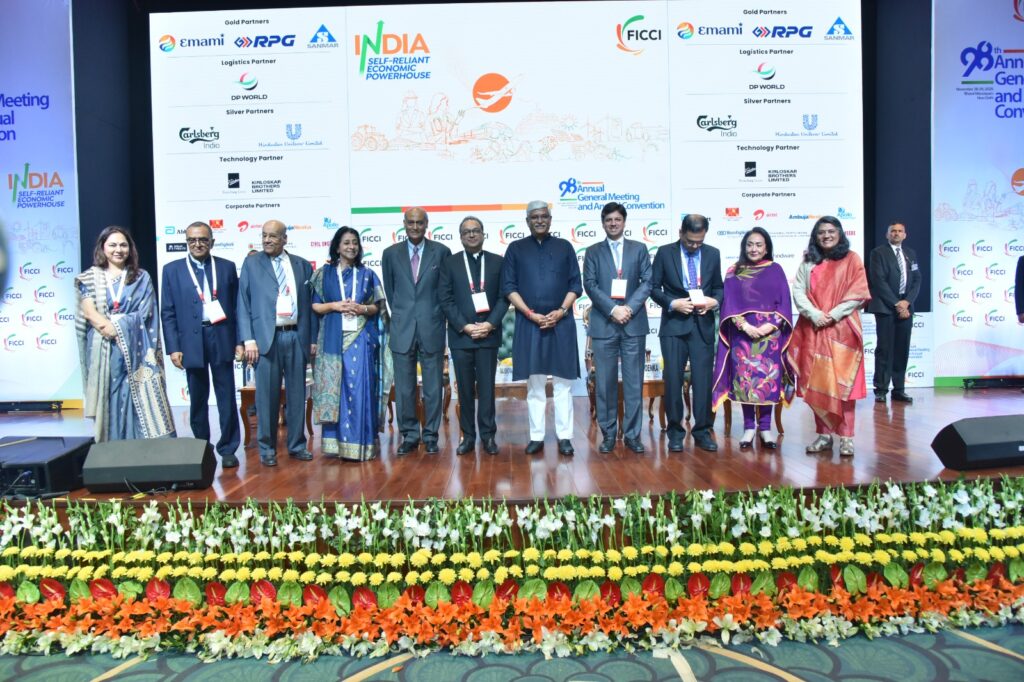
Indian tourism shows not a gap in potential, but a vast opportunity waiting to be unlocked: Harsha Vardhan Agarwal
New Delhi, 28 November 2025: The government is actively considering a harmonised infrastructure status to the hotel industry, a move that could unlock significant capital inflows and strengthen the country’s position in the global tourism market, Minister of Tourism and Culture, Shri Gajendra Singh Shekhawat,announced at the 98th AGM and annual convention of FICCI.
This is “a long-standing demand that will unlock capital, expand rooms inventory and strengthen our global price competitiveness,” the minister said.
The minister’s statement came as part of a comprehensive address outlining the government’s vision to transform tourism into a $1 trillion sector generating millions of jobs by 2047, when India marks its centenary of independence. Shekhawat emphasised that achieving this ambition requires substantial private investment and reimagined hospitality models to compete with regional peers.
The consideration of infrastructure status is part of a broader governmental push to position tourism as a structural engine of economic growth. The sector currently contributes 5.2 per cent directly to India’s GDP and supports 84 million livelihoods, according to FICCI President Harsha Vardhan Agarwal, who noted the industry could become a $250 billion opportunity by 2030 with appropriate policy support.
India has undertaken what Shekhawat described as “one of the largest tourism infrastructure programmes in the world”, with over Rs 12,000 crore invested in destination development. The government is developing 50 global-standard destinations under a challenge-mode framework, encouraging states to compete on infrastructure quality, user experience, and sustainability parameters.
Shekhawat highlighted the transformation of India’s connectivity infrastructure over the past decade, with operational airports expanding from fewer than 75 to 127, alongside 10 international-standard cruise terminals, 150,000 kilometres of new highways, 38 inland waterways for river cruises, and over 10,000 kilometres of metro lines across 23 tier I and II cities. The rejuvenation of temple corridors, including Kashi, Mahakal, Kedarnath, Puri and Ayodhya, represents “one of the most transformative tourism initiatives in modern India”, he added.