


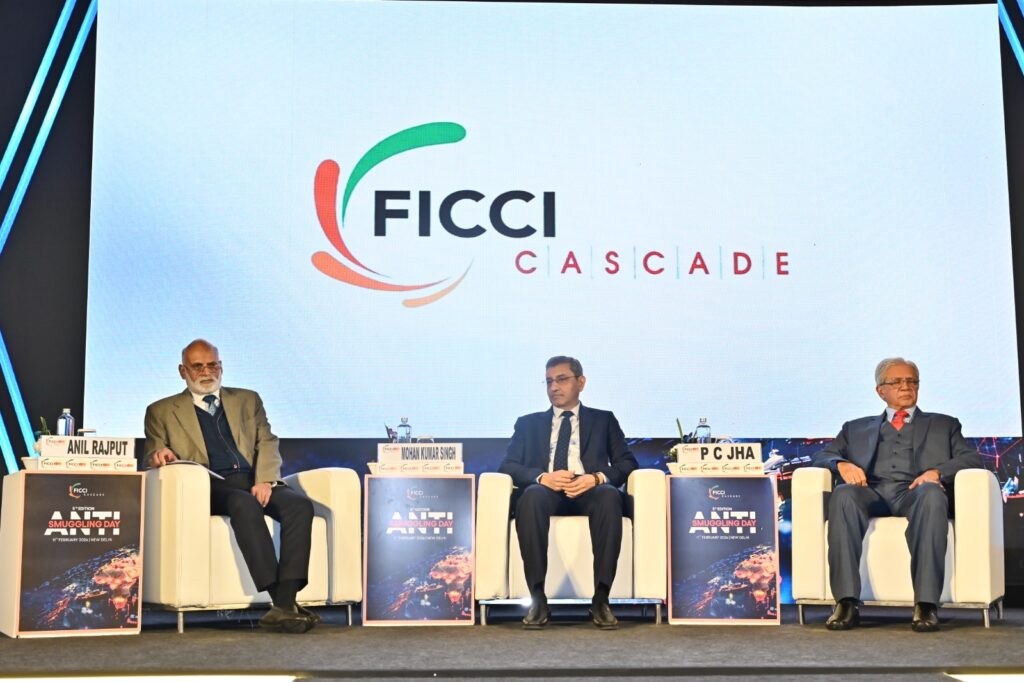
NEW DELHI : Underscoring the expanding scale and sophistication of transnational smuggling networks, Mr Mohan Kumar Singh, Member – Compliance Management, Central Board of Indirect Taxes and Customs (CBIC), today highlighted that India has significantly strengthened its international enforcement architecture with 42 Mutual Customs Cooperation Agreements (MoUs) already signed and 21 more under negotiation with major trading partners.
Addressing the FICCI-CASCADE’s 5th Edition of ‘Anti-Smuggling Day’ Mr Singh said that smuggling has evolved into an organised, technology-driven economic crime with direct implications for national security and economic stability.
“Our customs formations and the Directorate of Revenue Intelligence have intensified enforcement efforts significantly. In the first three quarters of the current financial year alone, we have seized around 500 kilograms of gold, nearly 150 million sticks of illicit cigarettes, over 20 metric tonnes of red sanders, approximately 120 kilograms of cocaine, around 50 kilograms of heroin, nearly 350 kilograms of amphetamines and close to 3,700 kilograms of hydroponic cannabis at airports. We have also detected over 100 wildlife trafficking cases, along with seizures involving dual-use goods, arms, ammunition, drones, and fake Indian currency notes,” Mr Singh stated.
He emphasised that today’s smuggling syndicates are commodity-agnostic and technologically agile, combining traditional concealment techniques with digital anonymity, complex financial layering, and cross-border coordination. “Enforcement must move beyond event-based seizures to network-based disruption. We need to target financial flows, logistics enablers and international linkages that sustain these illicit ecosystems. Customs acts as the first line of defence at the country’s borders. Through risk-based inspections, advanced cargo screening, non-intrusive examination systems, and AI-driven analytics, we are identifying suspicious consignments before they enter the domestic market,” added Mr Singh.
Referring to recent Union Budget announcements, Mr Singh noted that AI-powered image analytics and expanded container scanning across major ports will further strengthen enforcement capabilities, while GST simplification and customs reforms continue to promote compliance and reduce incentives for illicit trade.
Highlighting the importance of collective international action, Mr Anil Rajput, Chairman, FICCI CASCADE, said, “Combating smuggling cannot be the responsibility of one institution or one country alone. Strong partnerships among compliant nations are essential to promote legal trade, share intelligence, and decisively punish illicit operators. Just as UN-designated days such as the International Day against Drug Abuse and Illicit Trafficking have mobilised global attention, recognition of an International Anti-Smuggling Day by the United Nations would provide a powerful platform to deepen international cooperation and address the root causes and consequences of smuggling. India, with its growing leadership on combating transnational crime and enforcement cooperation, is well placed to champion this cause.”
Mr P C Jha, Advisor, FICCI CASCADE and Former Chairman, CBIC, stated that Anti-Smuggling Day is not a symbolic observance but a structural necessity. “Smuggling today is sustained by organised transnational networks, misuse of legitimate trade channels and digital platforms that enable rapid movement of illicit goods and proceeds. Enforcement must not remain limited to intercepting consignments; it must disrupt networks, deter repeat offenders and dismantle the financial structures that sustain illicit trade,” he added.
FICCI CASCADE has consistently highlighted the scale and impact of illicit trade through evidence-based research. A 2024 study commissioned by CASCADE estimates that the illicit market in India stood at nearly ₹8 lakh crore in 2022–23 across key sectors. Earlier findings in the report ‘Illicit Markets: A Threat to Our National Interests’ indicated that unlawful trade resulted in the loss of nearly 15.96 lakh legitimate jobs in 2019–20 alone, underscoring the deep economic and employment impact of smuggling on the formal economy.
The 5th Edition of Anti-Smuggling Day also featured two high-level panel discussions bringing together senior enforcement officials and international representatives.
The first panel on ‘Strategic Enforcement Against Smuggling: Protecting Economy, Borders, and Security’ was chaired by Mr. Najib Shah, Former Chairman, Central Board of Indirect Taxes and Customs and Think Tank Member, FICCI CASCADE. The discussion featured Brigadier Puspendar Sorayan, Commander 23 Sector, Assam Rifles; Mr. Mayank Pandey, Additional Director, Guwahati Zonal Office-II, Enforcement Directorate; and Mr. Varun Koundinya, Additional Director, Delhi Zonal Unit, Directorate of Revenue Intelligence. The session focused on coordinated intelligence sharing, disruption of organised criminal networks and leveraging technology to strengthen border security.
The second panel ‘Cross-Border Synergy: Strengthening International Partnership to Fight Smuggling’ opened with remarks by Dr. D P Dash, Former Principal Director-General, DRI; Former Chairman, Enforcement Committee, World Customs Organisation (WCO); and Think Tank Member, FICCI CASCADE. The panellists included Mr. Anil Sinha, Former Director CBI and Think Tank Member, FICCI CASCADE; Mr. Kristian Hölge, Regional Representative, UNODC Regional Office for South Asia; and Mr. Gagandeep Singh, Regional CBP Attaché, U.S. Customs and Border Protection, U.S. Embassy. The deliberations emphasised enhanced international cooperation, intelligence sharing and adoption of advanced surveillance and data analytics tools to combat evolving smuggling networks.
A key highlight of the observance was the presentation of awards to winners of the Digital Art Competition – “Stand Against Smuggling”, which attracted over 10,000 entries from across the country. The overwhelming participation reflects growing youth engagement and reinforces the importance of building a culture of ethical consumption and responsible citizenship.
Launched on 11th February 2022 as a global first, Anti-Smuggling Day has evolved into a significant policy and enforcement platform bringing together government, industry, international organisations and civil society to collectively combat the growing menace of illicit trade.